


There is a particular kind of facelift recovery story you see all over Instagram. Here I am before. Here I am bruised. Here I am looking completely insane. And here I am two weeks later, looking amazing and heading back to work.
I know because I’m guilty of posting it myself.
I’ve posted tons of photos and written extensively about my recovery. And visually, yes, you can look pretty good surprisingly quickly. The bruises fade. The truly crazy-looking period usually only lasts a week or so. By two weeks, you can leave the house looking relatively normal. People start telling you how amazing you look and you think: Great. We’re done here.
Except you are absolutely not done.
Instagram is short-form content. VERY short-form content. And what’s much harder to show in a before-and-after carousel is that facelift recovery can linger for a long, long time.
Not necessarily in ways anyone else can see, but in your body. In your workouts. In your skincare routine. Very much in your sleep and eating habits. And very much in your sex life.
Looking recovered and actually feeling recovered are two completely different things.
I didn’t fully understand before my facelift how much healing would still be happening long after I looked presentable.
A girlfriend of mine who is a fitness trainer recently asked me about recovery. Our conversation is actually what prompted me to write this story. I realized how much Instagram content, including some of my own, makes a facelift look like two weeks of looking crazy followed by the unveiling of your fabulous new face.
It’s so, so far from that.
As I keep saying, it was all worth it. I would get my facelift again in a heartbeat. It is one of the best decisions I’ve ever made. But this is major surgery. And I think social media often forgets that part.
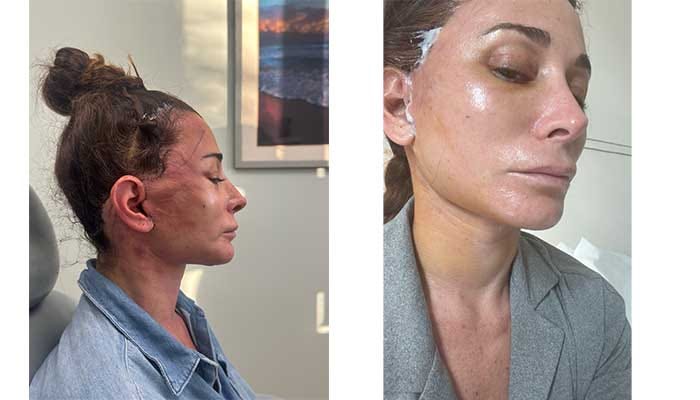
You may look like a shiny new version of yourself two weeks later. You probably won’t feel like yourself for many, many months. Potentially longer.
Being able to answer emails, go to dinner or walk back into an office is one level of milestone. Getting back to the way you actually live, eat, sleep, have sex, is another.
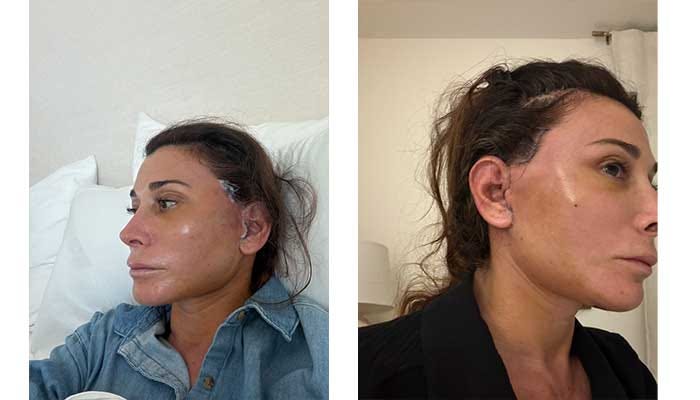
Those are the things you don’t think to ask about at your consult because you’re too busy asking where the scars will be, when you’ll look “normal,” and when you can go back to work.
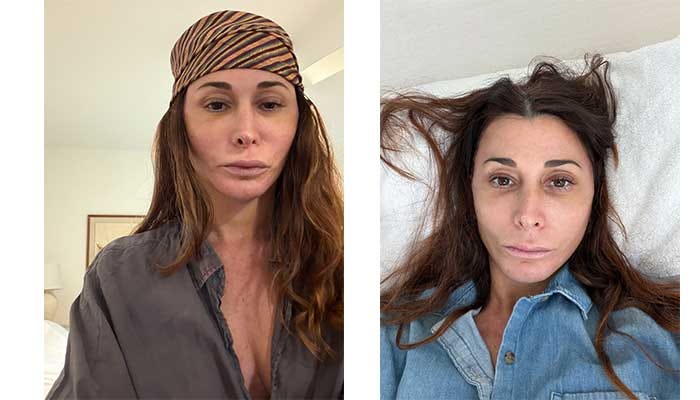
So, eight months later, here are the things I wish someone had told me.
Weightlifting, Yoga, and Getting Back To The Gym
This morning I was at the gym lifting weights and I thought to myself, this is the first time since February that I can really try to lift heavy weights again. I am 8 months post surgery.
To be clear, I was medically cleared to exercise much, much earlier. Dr. Mark Murphy (my amazing surgeon) knows I’m an avid yogi, and he told me no yoga until at least three months post-op. Most patients are cleared to return to the gym for light cardio around 3 to 4 weeks, and for full workouts at 6 weeks after a facelift.
And that is the key here: there is a big difference between being cleared medically to do things, but actually feeling like yourself doing them.
I got back to yoga in May, three months post-surgery. And while I felt… okay-ish, I still had a lot of neck strain and stiffness. I couldn’t do nearly as much as I could before surgery. And it wasn’t just because I’d taken three months off. There were things my body could technically do that my neck was simply not interested in doing yet.
When I turned my head in warrior poses I felt strain. I couldn’t do a wheel. Or a camel. I was slow in my motions overall and especially around my neck. I still felt a tiredness and slowness despite 12 weeks passing since surgery. I had to rest often in class.
Dr. Murphy assured me I couldn’t damage anything, but I still didn’t feel like myself. And this is all completely normal. But this is what I want anyone considering a facelift to understand: it will take a while to return to the activities that were once regular to you.
I returned to weight training around month three, but “weight training” is generous. I was lifting super light weights and constantly aware of my neck and added swelling. Any time I tried to push hard, I could feel the strain. I could feel a swell.
It’s only in the last 6 weeks that I felt comfortable really lifting to my max again.
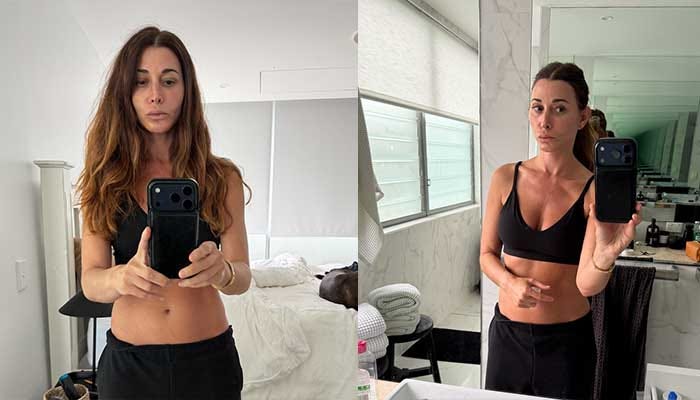
You know that slightly deranged grunt you make when you go up a weight and are fighting through the last two reps? I couldn’t have imagined doing that a few months ago as it would have felt way too uncomfortable. It has taken this long, at least for me, to feel comfortable really pushing my body.
My girlfriend that is 3 months post surgery tells me she still feels strain picking up heavy things.
Again, this is all completely normal, and recovery can vary enormously from patient to patient.
On a side note, it’s pretty weird wearing headphones or earbuds for a while. I didn’t do that again until about May either.